

Nur Hidayat, Abroto, Rosyidah Dzunur’aini
Universitas Islam Negeri Sunan Kalijaga, Yogyakarta, Indonesia; nur.hidayat@uin-suka.ac.id
Instittut Agama Islam Abuya Salek, Sarolangun, Indonesia; ahmadabroto05@gmail.com
MTs Muhammadiyah 6 Sidoharjo, Indonesia; dzunuraini24@gmail.com
http://journal.staihubbulwathan.id/index.php/alishlah
ABSTRACT
Adolescent psychiatry reveals that 95.4% of adolescents aged 16-24 exhibit anxiety symptoms, and 88% show signs of depression, largely due to excessive social media use, resulting in character decline and apathy. This study explores the role of early character building in improving the formation of ethics in children in Sarolangun Regency, addressing concerns related to the negative effects of social media. A qualitative, descriptive approach was employed to investigate how habituation practices contribute to the development of student ethics. The study focused on five schools in Sarolangun Regency: SDIT AL Fatih, SDIT Rahmatul Ummah, SDIT AL Kahfi, SDN 1, and SDIT AS- Salam. Data collection involved interviews and observations of students, teachers, and parents to assess their roles in ethical development. The findings demonstrate that while technological advancements offer various benefits, they also introduce significant challenges, particularly in the realm of student behavior. Teachers actively work to mitigate the negative impacts of social media by providing guidance, instruction, and education on its dangers. Additionally, parents play an essential role in fostering ethical behavior, contributing significantly to children’s moral development through consistent support and proper guidance. Both educators and parents are pivotal in guiding students’ ethical growth amidst the increasing influence of social media. The combined efforts of these stakeholders ensure that children develop strong ethical foundations, helping counteract the potential negative impacts of technology. The study highlights the importance of early ethical education and the need for collaboration between teachers and parents to effectively guide children in the responsible use of social media.
Keywords: Adolescent Mental Health; Social Media Impact; Ethical Development; Early Character Formation
Article history: Received 2024-07-03, Revised 2024-08-12, Accepted 2024-09-27
Corresponding Author: Abroto (Institut Agama Islam Abuya Salek Sarolangun1) : ahmadabroto05@gmail.com
1. INTRODUCTION
Generation Z is faced with various complex problems, including efficiency in using social media in daily activities. As many as 95.4% of children to adolescents experience complex conditions from a psychiatric study perspective, including saying that as many as 88% of children experience depression, excessive anxiety and addiction to using social media. The role of children as part of the pillars of the nation’s hope is a momentum that can be given to strengthen character building in forming personality ethics in daily activities (Abubakar et al., 2022). The current generation is being prepared as future leaders, if they are poisoned by negative things, it will have a bad impact on the peace of the country in the future (Črešnar and Nedelko, 2020). The need to anticipate moral damage caused by the misuse of social media, especially that which contains elements of violence and pornography (Farré et al., 2020). Every child has the right to be free from violent behavior and the freedom to watch violence, without time and place restrictions (Durrant et al., 2020). In this case, children tend to be victims. Currently, the Indonesian nation is faced with a problem of moral decadence that is quite concerning (Simangunsong et al., 2024). The problems of violence, crime, fighting, free sex, pregnancy outside marriage, drug abuse, and drinking alcohol are realities of life that occur around us (Lankford, 2021). Therefore, parents, educators and exhibitions must protect children from negative viewing (MacDonald et al., 2017). Lost morality is starting to affect elementary, middle, and high school children due to habit patterns that are carried out without any supervision from parents (Afifah et al., 2018).
This issue needs special attention from education experts, especially moral values education experts (Wan and Bi, 2020). The implementation of moral education learning in schools has not been in accordance with the expectations as stated in Law Number 20 of 2003 concerning the National Education System, namely developing abilities and forming the character and civilization of a dignified nation (Yuniarto & Yudha, 2021). The decline in the morality of this nation’s generation is a reflection of the behavior of individuals who have no character, so that it has a negative impact on the management of the state, corporations, and the legal system, which will ultimately reduce the nation’s competitiveness in the eyes of the international community, and then make Indonesia decline socially, economically, and culturally (Harmadi et al., 2022). Efforts to form the nation’s character are carried out through the habituation of discipline values in children from an early age, carried out by parents and teachers at school (Abroto et al., 2022).
This role is based on several things, firstly, the scope of education itself is not only limited to knowledge but also includes certain attitudes, values and behavioral patterns (Gualano et al., 2019). Then the magnitude of the challenge of moral education due to the globalization of information by information media tends to be controlled by developed countries that have different moral standards (Akbar et al., 2022). In addition, a permissive attitude to life as a result of increasingly difficult life challenges, the demands of modern life tend to make formal educational institutions the spearhead for developing students’ disciplinary values (Marbach-Ad et al., 2019).
Reckitt Benckiser, Hidayat in his research said that Indonesia through the Durex contraceptive brand against 500 teenagers in five major cities in Indonesia found that 33% of teenagers had had penetrative sex. From these results, 58% had penetrative sex at the age of 18 to 20 years (Hidayat et al., 2023). In addition, the participants in this survey were those who were not married. Meanwhile, teenage drug victims reached 1.1 million or 3.9%. The data was taken in 2008, by taking samples in 33 provinces in Indonesia. Data from the Jakarta Social Disorder Control Center states that elementary, middle, and high school students involved in fights reached 0.08% or around 1,318 students out of a total of 1,647,835 students in Jakarta (Natonis, 2020). The current student problems do not stop there, recently, there have been many cases of students fighting against their teachers, such as what happened in Madura (Sulasmiyati, 2021). This is, of course, too much. There is no longer a sense of respect and ethics embedded in students (Hyytinen and Löfström, 2017).
Lost control in the use of social media education has an impact on students’ ethics and personality (Wang et al., 2022.). Freedom to access anything, ease of spreading hoax news, declining ethics and manners, and other impacts (Lewandowsky et al., 2017). Therefore, the role of teachers and parents is very much needed as controllers of students so that they do not use social media excessively (Guo, 2018). As a child who does not yet fully understand the limits of using social media, this can have fatal consequences for the child (Cataldo et al., 2021). The development of technology means that anyone can control the world in their grasp, so it can become an extraordinary weapon if used for good (Release, 2022).
Efforts to form children’s character through preemptive steps in efficiency in ethical abilities in children from an early age carried out by teachers and parents in Sarolangun Regency are the basis for this research. This is based on the misuse of social media, which today’s children should have control over their development. Every child must get the best education guarantee from an early age because their future, the future of society, the nation, and the whole world depends on the child. This article will explain the impact of social media abuse, along with solutions and the efforts of teachers and parents in fostering ethics through social media. To find out the causes of social media abuse and the impact of social media abuse on the ethics of Indonesian students,
2. METHOD
The method used in this study is a qualitative research method defined by Bogdan and Taylor as a research procedure used to produce written or oral descriptive data from people and behaviors observed by research in the field. According to (Sugiyono, 2014). Qualitative research methods are research methods based on post-positivism philosophy, used to study the natural conditions of objects, where researchers are key instruments, data source sampling is carried out purposively, and snowball, data collection techniques with triangulation analysis are inductive or qualitative.
Meanwhile, the samples used as the subjects of this study were teachers and students of SDIT AL Fatih, SDIT Rahmatul Ummah, SDIT AL Kahfi, SDN 1, and SDIT AS-Salam in Sarolangun Regency. The sampling technique used was purposive sampling. This purposive sampling technique is based on a trait or characteristic that exists in a previously known population. According to Marshall and RossmanPutranta & Supahar (2019). Purposive sampling method is a technique or way of taking research subjects that is not based on a level and random, but based on the existence of a purpose. The teachers selected in this study based on their fields amounted to 5 teachers in different schools. While the students selected based on existing cases amounted to 10 students.
The data collection technique in this study uses three techniques that are carried out repeatedly so that the validity of the data can be accounted for, namely: First, Observation is interpreted as a systematic observation of the symptoms that appear in the object of research. In this study, the researcher used unstructured observation. The researcher conducted observations of the objects to be studied based on the problems that occurred from the results of observations at SDIT AL Fatih, SDIT Rahmatul Ummah, SDIT AL Kahfi, SDN 1, and SDIT AS-Salam, Sarolangun Regency. there are almost the same problems, namely the misuse of social media by SDN Sarolangun students.
Data analysis techniques in the early stages of research are using interactive analysis techniques, with three components, namely data reduction means summarizing, choosing the main points, focusing on important things, looking for themes and patterns and discarding unnecessary ones, data presentation is done in the form of brief descriptions, charts, relationships between categories, flow diagrams, and drawing conclusions means it is still temporary, and will change if no strong evidence is found to support it at the collection stage.

Figure 1. Research Flow of Social Media Utilization on Student Ethics in Sarolangun Regency
3. FINDINGS AND DISCUSSION
3.1 Impact of Social Media Abuse
Based on the results of observations in several elementary schools, namely SDIT AL Fatih, SDIT Rahmatul Ummah, SDIT AL Kahfi, SDN 1, and SDIT AS-Salam in Sarolangun Regency. From the results of the observations, it was found that:
| No | Impact of Social Media Abuse |
|---|---|
| 1 | The spread of hoax news |
| 2 | Increasing anxiety traits in child personality psychology |
| 3 | Decreasing student productivity |
| 4 | The loss of ethics and normative behavior in students |
| 5 | The increasing creation, distribution, and use of pornography at an early age |
The observations indicate that the misuse of social media can lead children toward negative behaviors. Children are often exposed to various types of content without realizing the potential harm, and this is compounded by a lack of strict parental supervision (Akbar et al., 2022). Exposure to violent content and instances of sexual harassment on social media can gradually alter children’s perceptions, making them believe that actions like bullying and exposure to pornography are normal and acceptable. Without adequate supervision, the negative impact on children is likely to increase, emphasizing the need for active monitoring to prevent these harmful influences.

Figure 2. Impact of social media abuse
Judging from the presentation of the image above, it can be seen that the impacts caused are very diverse and dangerous for students. Based on the results of interviews and direct observations of students who use social media directly in the field, researchers found that the behavior and behavior of students who are not happy when reprimanded and talked to, always throw out inappropriate sentences, This was also conveyed by one of the teachers of SDIT Rahamtul Ummah (RR) who stated the impact of social media abuse as follows:
“My duties and roles are always to remind about the dangers of using social media without strict supervision, we also often convey this appeal to parents of students to always help teachers to supervise students when they are playing social media, so that unwanted things do not happen, especially now that technology is very sophisticated what we think will appear according to our wishes, this is certainly dangerous for students because they do not really understand the limits of using social media, if they are tired of playing on their cellphones, later their study hours will also be reduced and communication with parents will also be reduced.”
Based on the statement delivered by one of the teachers of SDIT Rahamtul Ummah (RR) Regarding the dangers that arise if students are given the freedom to use their social media, in accordance with the responsibility of a teacher, he has given a warning to students and even guardians to work together in maintaining and controlling students’ playing hours so that they are not excessive and exceed the limits that should be. This is also in line with research conducted by Subrata, Joe, and Syahrul with the hope that there is still a lot of misuse of social media in society (Harahap, 2022) Literally means “misuse” which means not in accordance with what it should be.(Forgács and Pléh, 2022). Thus, the misuse of social media is an act of misuse and deviation in the use of social media, the most common form of misuse of social media is the spread of fake news or what is commonly called a hoax (Diani et al., 2022).
So most social media users only become forwarders or disseminators of the information they receive, without being able to trace its origin and truth (Sloan and Quan-Haase, 2017) Many hoax news stories are spread not only by one person but are deliberately spread to the public.(Mufid & Hariandja, 2019)However, there are some people who use social media as a place to simply forward messages without knowing the truth, where the source is, whether the data is valid or not (Pinardi & Darmawanti, 2023)As social media users, we should be wise in responding to every message that comes in or out. Therefore, we, as the younger generation, should not be easily carried away by the flow of fake news, let alone spread it just because we keep playing and sometimes are not careful in filtering information.
3.2 The role of teachers in guiding students in using social media
Based on the results of observations and interviews in several elementary schools, namely SDIT AL Fatih, SDIT Rahmatul Ummah, SDIT AL Kahfi, SDN 1, and SDIT AS-Salam in Sarolangun Regency. The fact that teachers basically also have a big role in shaping students’ character. Characters that are certainly good characters, one of which is discipline. From the results of the researcher’s observations of the efforts and roles of teachers carried out in several elementary schools in Sarolangun Regency. For more details, the following data can be presented:
Table 1. Roles and Efforts Made by Teachers
| School name | Efforts made by the teacher |
|---|---|
| SDITAl-Fatih | Students are not allowed to use Social Media while at school. Conveying the negative impacts of social media Conveying the positive impacts of social media |
| SDITThe Grace of the People | Controlling students while at school Remind students about the limitations of playing social media Reminder about the negative effects of social media Reminding of the positive impacts of social media |
| SDITAl-Kahfi | Remind students about the limitations of playing social media Inviting parents to work together Conveying the negative impacts of social media |
| SDITGreetings | Banning the use of mobile phones in schools Warning about the negative impacts of social media Socialization of the Dangers of Social Media |
| SD N 1 | Banning the use of mobile phones in schools Inviting parents to cooperate Warning about the negative impacts of social media |
Based on the results of interviews with elementary schools SDIT AL Fatih, SDIT Rahmatul Ummah, SDIT AL Kahfi, SDN 1, and SDIT AS-Salam in Sarolangun Regency. It can be presented in the table above and it is clear that one way that teachers can apply to instill good ethics is by tricking, guiding and giving consequences. From several schools, SDIT AL Fatih, SDIT Rahmatul Ummah, SDIT AL Kahfi, SDN 1, and SDIT AS-Salam in Sarolangun Regency, all agencies and teachers always remind and provide direction about the impacts caused so that teachers also work together with parents of students to get maximum results. This is supported by the opinion of Setiawati in Rahmadi and Pancarania that at the age of 4-9 years, children’s moral development is in the pre-conventional morality phase (Rahmadi & Pancarania, 2020). At this stage, the child’s behavior is controlled by the physical consequences that arise from his actions, which usually appear in the form of rewards and punishments.
The role and responsibility of a teacher is not only to teach students but also to shape better behavior (Keiler, 2018). Education will not run well without supporting elements. One of them is the role of teachers in it. Teachers play a big role in the learning process.(Lawrence and Tar, 2018). Students are also great imitators, so whatever is in the teacher will be imitated by the students. Therefore, teachers should provide a good example to their students in all things by explaining that humans should help and respect each other. Awards and consequences will motivate students to have a disciplined attitude. Awards and consequences given to students are expected to be used as a means to train students to have a disciplined attitude in classroom learning activities and all aspects of their lives as a whole so that what is the goal of education can be implemented properly. This is reinforced by the opinion of Martsiswati and Suryono, who said that discipline has a close relationship with motivation, with motivation, children are increasingly encouraged to take actions that are in accordance with what others want from them (Devi et al., 2022). In order to create ethics and good manners in students.
3.3 The Role of Parents in the Use of Social Media
Parents also have a role that is no less important than teachers, when children are at home, the right to control and guidance returns to the parents so that the parenting pattern of parents greatly influences the ethics and character of their children. Based on the results of observations and interviews at Elementary Schools SDIT AL Fatih, SDIT Rahmatul Ummah, SDIT AL Kahfi, SDN 1, and SDIT AS- Salam in Sarolangun Regency, for more completeness the author presents it in the form of a graph as follows.
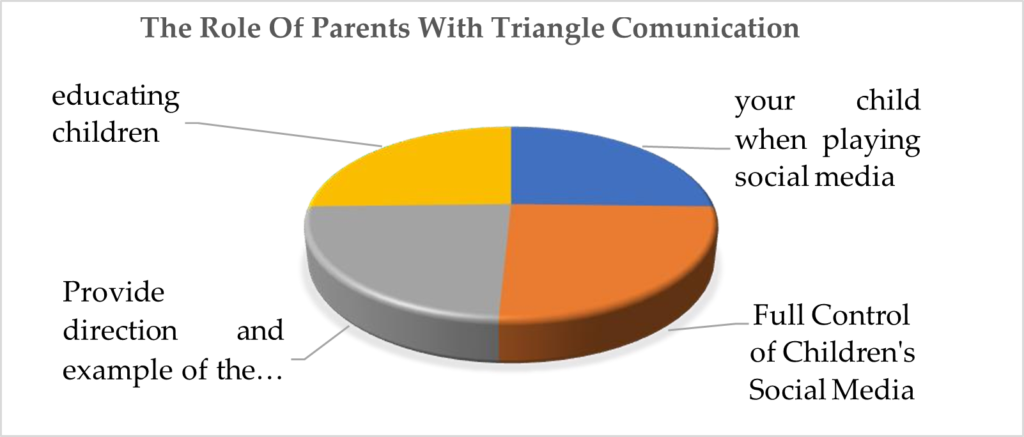
Graph 1. The Role of Parents in Social Media Use
Based on the results of interviews with parents of students at SDIT AL Fatih, SDIT Rahmatul Ummah, SDIT AL Kahfi, SDN 1, and SDIT AS-Salam in Sarolangun Regency. That students who play social media must be supervised and controlled properly while providing good examples and education so that students do not make mistakes in using social media. Information technology also has a negative impact on society. “As we have seen lately, there has been a lot of disturbing information, which is blasphemous, divisive. There is hate speech, which is insulting, slanderous, provocative. And if we also pay attention to the language used, it is also an impolite language. Once again, this is not our culture, not our personality. Therefore, we must not run out of energy for things like this.
This is in line with research conducted by (2021) that states that the rapid development of information technology must be truly directed and utilized in a positive direction, towards the progress of our nation. To increase knowledge, broaden horizons, spread positive values, values of optimism, values of hard work, values of integrity and honesty, values of tolerance and peace, values of solidarity and nationality. In Indonesia, there are currently 132 million active internet users or around 52% of the population. Of the number of internet users, there are around 129 million people who have active social media accounts and spend an average of 3.5 hours per day consuming the internet via their mobile phones. Therefore, it is very important to supervise and protect children when using social media.
4. CONCLUSION
The rapid advancement of technology has brought significant benefits, but it also poses challenges, particularly through the misuse of social media. Common issues include the spread of false information, cyberbullying, increased anxiety, depression, online fraud, and the general distraction that social media can cause. Observations from students at SDIT AL Fatih, SDIT Rahmatul Ummah, SDIT AL Kahfi, SDN 1, and SDIT AS-Salam in Sarolangun highlight the effectiveness of a collaborative approach known as the “golden triangle,” involving teachers, parents, students, and educational institutions. This approach focuses on fostering ethical social media behavior through improved communication, monitoring social media usage, and guiding students’ moral development. However, the study is limited to a specific set of schools, which may restrict the generalizability of its findings. Future research should explore similar initiatives across a broader range of educational settings to understand their effectiveness in different contexts and further refine strategies for promoting ethical social media use among children.
REFERENCE
Abroto, A., Nugraheni, AS, & Awliyah, RF (2022). The Role of the Family in Children’s Moral Education. Basicedu Journal, 6(2),2717-2723.
Abubakar, I., Dalglish, SL, Angell, B., Sanuade, O., Abimbola, S., Adamu, AL, Adetifa, IMO, Colbourn, T., Ogunlesi, AO, Onwujekwe, O., Owoaje, ET, Okeke, IN, Adeyemo, A., Aliyu, G., Aliyu, MH, Aliyu, SH, Ameh, EA, Archibong, B., Ezeh, A., … Zanna, FH (2022). Nigeria Lancet Commission: Investing in the Nation’s Health and Future. Lancet, 399(10330), 1155–1200.
Afifah, IRH, Prasetiyo, N., & Ramadhan, RA (2018). Instilling Social Concern Character Values in Early Childhood in the Traditional Cat and Mouse Game at Mutiara Hati Kindergarten. Kopen: National Education Conference, 1(1), 1-5.
Akbar, AM, Rahma, T., Lemuel, Y., Fitriana, D., Fanani, TRA, & Sekarjati, RDLG (2022). Moral Education and Pancasila in Encouraging the Prevention of Intolerance in the Era of Globalization: The Experience of Indonesia and Malaysia. Panjar Journal: Community Service in the Field of Learning, 4(2), 223-282.
Cataldo, I., Lepri, B., Neoh, M.J.Y., & Esposito, G. (2021). Social Media Use and the Development of Mental Disorders in Children and Adolescents: A Review. Frontiers In Psychiatry, 11.83-95.
Črešnar, R., & Nedelko, Z. (2020). Understanding Future Leaders: How Do Personal Values of Generations Y and Z Adapt to Leadership in Industry 4.0? Sustainability, 12(11), 4417.
Devi, IGAF, Jampel, IN, & Antara, PA (2022). The Positive Influence of Behavioral Contract Techniques on Children’s Discipline. Indonesian Journal of Value and Character Education, 5(1),42-51.
Diani, I., Arono, & Yunita, W. (2022). Pragmatic Study of Verbal Violence Against Women and Children Carried Out by Bengkulu Society on Social Media, at School, and in the Family. Kembara: Journal of Language, Literature, and Teaching, 8(2), 391-406.
Durrant, J.E., Stewart-Tufescu, A., & Afifi, T.O. (2020). Recognizing Children’s Right to Be Protected from Physical Abuse: An Update on Progress and a Call to Action. Child Abuse & Neglect, 110, 104297.
Farré, J.M., Montejo, A.L., Agulló, M., Granero, R., Chiclana Actis, C., Villena, A., Maideu, E., Sánchez, M., Fernández-Aranda, F., Jiménez-Murcia, S., & Mestre-Bach, G. (2020). Pornography Use in Adolescents and Its Clinical Implications. Journal of Clinical Medicine, 9(11), 3625.
Forgács, B., & Pléh, C. (2022). Subtle Metaphors in Climate Science. In S. Wuppuluri & A. C. Grayling (Eds.), Metaphor and Analogy in the Sciences and Humanities: Words and Worlds pp. 447– 477.
Gualano, M., Olivero, E., Voglino, G., Corezzi, M., Rossello, P., Vicentini, C., Bert, F., & Siliquini, R. (2019). Knowledge, Attitudes, and Beliefs Towards Mandatory Vaccination: A Systematic Review. Human Vaccines and Immunotherapy, 15(4), 918–931.
Guo, G. (2018). Design and Implementation of Smart Campus Auto-Completion PLC Control System for Internet of Things. IEEE Access, 6, 62601–62611.
Harahap, SK (2022). Socialization of Ethics of Use and Misuse of Social Media Among the Young Generation. Journal of Academic and Community Liaison, 2(4), 132-137.
Harmadi, MBR, Adiguna, AJ, Putri, DCS, Banuati, N., Pambudi, AL, & Broto, LSW (2022). Moral Education and Social Attitudes of the Young Generation: Challenges for Indonesia and the International World. Panjar Journal: Community Service in the Field of Learning, 4(2), 173-222. Herwin, H., Mahmudah, M., & Saleh, S. (2021). Analysis of Language Crimes in Social Media (Forensic Linguistics). Fon: Journal of Indonesian Language and Literature Education, 17(2), 159–168.
Hyytinen, H., & Löfström, E. (2017). Reactive, Proactive, Implicit, Explicit? Academics’ Pedagogical Conceptions on How to Promote Research Ethics and Integrity. Journal of Academic Ethics, 15(1), 23–41.
Keiler, LS (2018). Teacher Roles and Identities in Student-Centered Classrooms. International Journal of STEM Education, 5(1), 34.
Lankford, A. (2021). A Sexual Frustration Theory of Aggression, Violence, and Crime. Journal of Criminal Justice, 77, 101865.
Lawrence, JE, & Tar, UA (2018). Factors Influencing Teachers’ Adoption and Integration of ICT in Teaching and Learning Process. Educational Media International, 55(1), 79–105.
Lewandowsky, S., Ecker, UKH, & Cook, J. (2017). Beyond Misinformation: Understanding and Confronting the “Post-Truth” Era. Journal of Applied Research in Memory and Cognition, 6(4), 353–369.
Macdonald, E., Johnson, V., Gillies, M., & Johnston, D. (2017). Impact of a Museum-Based Hazard Education Program on Students, Teachers, and Parents. International Journal of Disaster Risk Reduction, 21, 360–366.
Marbach-Ad, G., Hunt, C., & Thompson, K. V. (2019). Exploring Undergraduate Students’ Attributed Values to Cross-Disciplinary Skills Needed in the Workplace: An Analysis of Five Disciplines. Journal of Science and Technology Education, 28(5), 452–469.
Mufid, FL, & Hariandja, TR (2019). Effectiveness of Article 28 Paragraph (1) of the ITE Law Concerning the Spread of Fake News (Hoax). Jurnal Rechtens, 8(2), 179-198.
Natonis, HY (2020). Character Education in Forming Ethical Behavior of Kupang Stakn Students. Book: Journal of Christian Religious Education, 1(1), 38-46.
Pinardi, P., & Darmawanti, I. (2023). Post-Truth Era: The Threat of Polarization Through Family Whatsapp Groups. Journal of Theoretical and Applied Psychology, 14(1), 60–78.
Putranta, H., & Supahar, S. (2019). Development of Physics Level Test (Pystt) to Measure Students’ Conceptual Understanding and Creative Thinking Skills: Qualitative Synthesis. Journal of Education of Talented Young Scientists, 7(3), 747-775.
Rahmadi, P., & Pancarania, DP (2020). The Role of Teachers in Forming Disciplinary Attitudes of Grade I Elementary School Students Through Rewards and Intellectuals [The Role of Teachers in Forming Disciplinary Attitudes of Grade 1 Elementary School Students Through Rewards and Consequences]. Johme: Journal of Holistic Mathematics Education, 4(1), 80-101.
Riesen, E. (2022). Moral Arguments for the Development and Use of Autonomous Weapons Systems. Journal of Military Ethics, 21(2), 132–150.
Saidek, AR, Islami, R., & Abdoludin. (2016). Character Issues: The Reality of Character Problems and Their Solutions Through Education in Indonesia. Journal of Education and Practice, 7(17), 158– 165.
Simangunsong, L., Amsani, H., & Pasaribu, P. (25 January 2024). Tracing the Traces of Dutch Colonial Heritage in Lau Simomo Village as a Local Historical Awareness Attitude to Prevent Moral Decadence of the Young Generation of Tanah Karo. Proceedings of the 5th International Conference on Innovation in Education, Science, and Culture, Iciesc 2023, 24 October 2023, Medan, Indonesia.
Sloan, L., & Quan-Haase, A. (2017). Sage Handbook of Social Media Research Methods. Sage. Sugiyono. (2014). Quantitative, Qualitative and R&D Research Methods. Alfabeta.
Sulasmiyati, S. (2021). Implementation of Strengthening Character Education in Elementary and Middle Schools. Proceedings of the National Seminar on Educational Management, 2(1), 314- 327.
Wan, Y., & Bi, H. (2020). What Key “Socio-Scientific” Topics Should Be Focused on in Science Curriculum? A Delphi Study of Expert Communities in China. International Journal of Science and Mathematics Education, 18(1), 61–77.
Wang, Y.-Y., Wang, Y.-S., & Wang, Y.-M. (2022). What Drives Students’ Internet Ethical Behavior: An Integrated Model of Theory of Planned Behavior, Personality, and Internet Ethics Education. Information Behavior & Technology, 41(3), 588–610.
Yuniarto, B., & Yudha, RP (2021). Citizenship Education in National Character Building. International Journal of Education and Humanities, 1(3), 162-170.